Welcome

Laboratory for Aquaculture Laboratory for Aquaculture

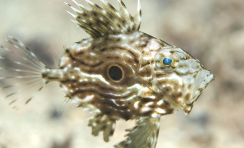
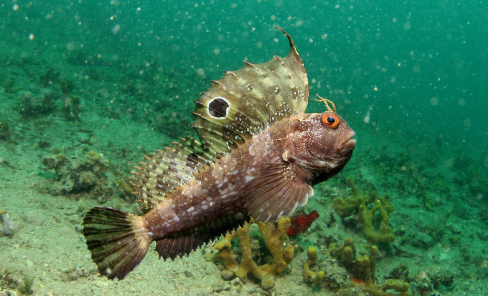
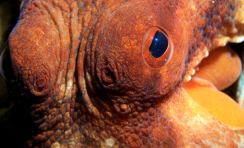
Part of the Laboratory for Aquaculture research is focused on the issue of introducing new types of aquaculture. Research includes high-value types: dentex KRUNAŠ (Dentex gibbosus) and ŠKRPINA (Scorpaena scrofa). Method of collecting MATIČNIH specimens and their adaptability to the conditions of detention and feeding is determined. When octopus (Octopus vulgaris) is considered, we managed to achieve spawn, after which we explored the incubation process, VALJENJE and the possibility of breeding the early stages of development - PARALIČINKI.


Research includes tuna (Thunnus thynnus) breeding; based on fishing. Also includes research of diseases, with emphasis on parasitic invasion. Isolation and identification of parasites is carried out, and also description of their ultrastructure by light and electron microscopy. Immunohistochemical reaction of tuna tissue to bigender fluke invasion is observed. Octopus parasitic invasion is monitored, with an emphasis on the presence of parasite stages in RAČIĆI which are octopus's main source of food. In recent times, together with colleagues from Austria, we conduct a research of parasitofauna population of eels.

Population-genetic studies include genetic diversity determination and taksonomical origin of fish and shellfish, for protection of their origins. Also includes researching the distribution and degree of migration of local populations, and the genetic structure changes that occur in the parent flock farms and their impact on the surrounding free population.

One of the activities of the Laboratory for Aquaculture is mathematical modeling of the enviromental impact of fish farms. So we created two computer programs (TunaMod and AquaKult), used in studies of environmental impact of tuna, KOMARČA and sea bass farms.